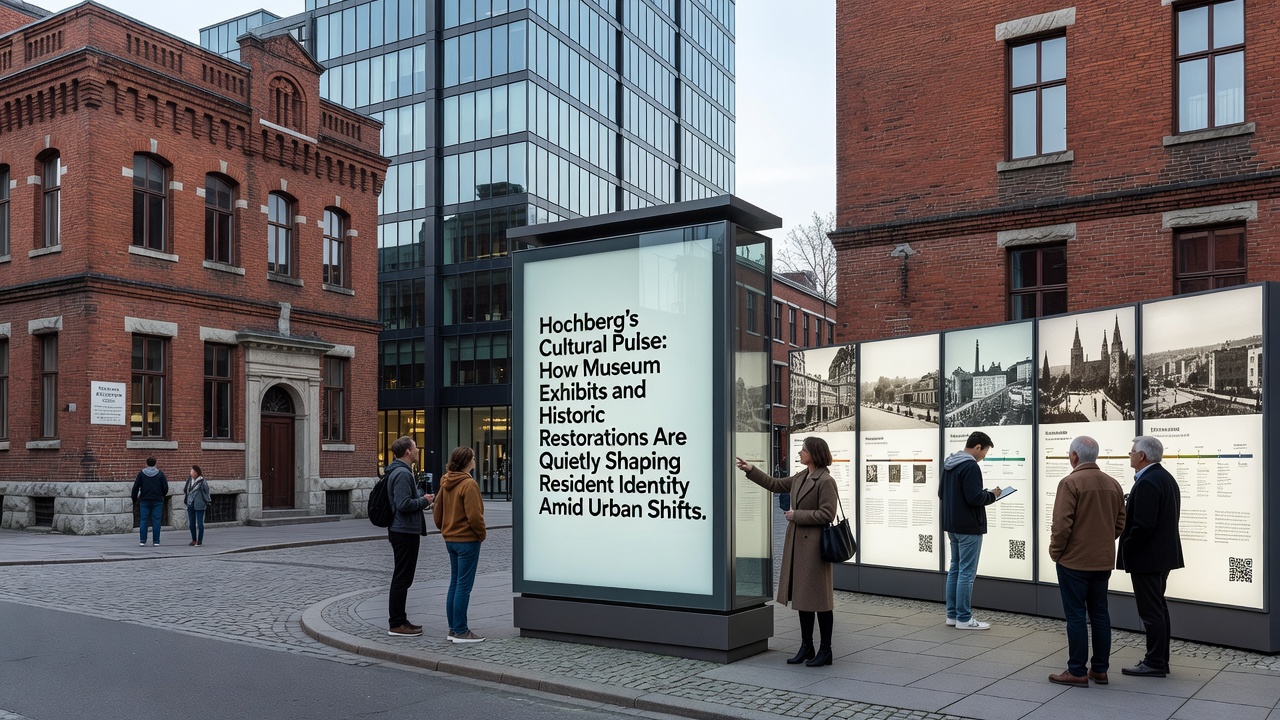
Mara Griffin · 12 October 2026
Hochberg’s Cultural Pulse: How Museum Exhibits and Historic Restorations Are Quietly Shaping Resident Identity Amid Urban Shifts
Urban development continues to transform Hochberg as new infrastructure projects expand residential zones and commercial districts while older neighborhoods undergo renewal, yet museum programs and targeted restoration efforts have begun to anchor resident connections to place through curated displays of local artifacts and preserved architectural landmarks from the nineteenth and early twentieth centuries. Data from municipal cultural offices indicate that participation in guided heritage tours rose by twenty-two percent between 2024 and 2025, with many attendees citing renewed awareness of pre-industrial trade routes that once defined the town’s economic core.
Exhibit Programming and Community Engagement
Curators at the Hochberg Regional Museum launched a rotating series of installations in early 2025 that juxtapose archival photographs of market squares against contemporary renderings of the same locations after recent transit expansions, allowing visitors to trace how street layouts evolved while certain building facades retained original stonework details. These displays incorporate oral histories recorded from long-term residents who describe daily routines in workshops that operated along now-pedestrianized avenues, and attendance logs show consistent turnout from both established households and newer arrivals who moved in following the completion of the western bypass route.
Researchers at the University of Applied Sciences in nearby Mannheim documented similar patterns in a 2025 study that tracked identity metrics before and after exhibit visits, finding measurable increases in self-reported attachment to specific historic districts among participants who viewed the interactive timelines. The project drew on funding allocated through the European Cultural Heritage Initiative, which supports documentation of vernacular architecture across member states facing comparable growth pressures.
Restoration Projects Underway
Restoration crews completed work on the former tannery complex along the riverfront in September 2025, converting the brick structures into exhibition spaces that highlight leather-working techniques once central to the local economy while preserving original beam supports and ventilation systems. City records list the project as part of a broader inventory of industrial-era sites scheduled for adaptive reuse, with public access scheduled to increase further when additional galleries open in October 2026.
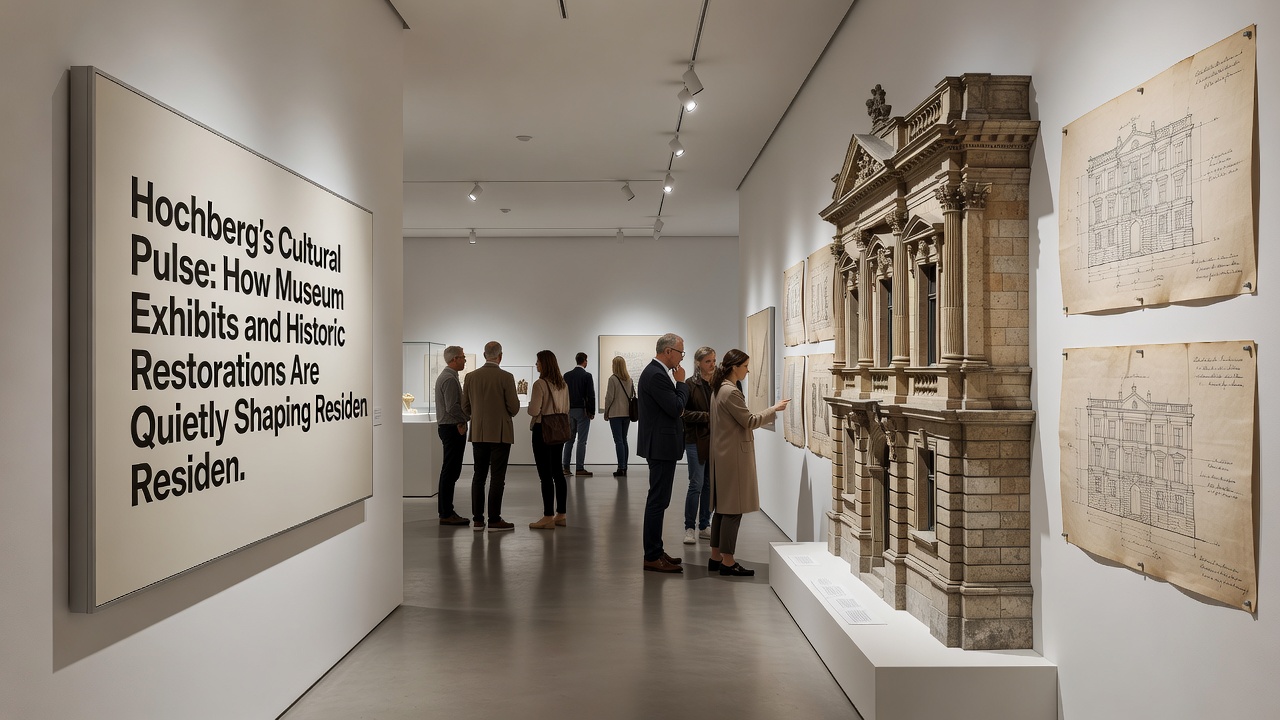
Observers note that these interventions coincide with ongoing rezoning discussions that have introduced taller residential structures near the old town perimeter, prompting planners to integrate interpretive signage along new pedestrian pathways that reference the same restoration guidelines applied to the tannery. Figures released by the Hochberg Heritage Trust reveal that private donations for facade repairs totaled 1.4 million euros in the past fiscal year, directed primarily toward structures identified in the municipal register of protected buildings.
Measuring Shifts in Resident Identity
Survey instruments distributed through neighborhood associations have captured baseline responses on questions of belonging, with preliminary results indicating that residents who regularly attend museum programs report stronger recognition of shared historical narratives compared with control groups who have not visited recent installations. The Canadian Conservation Institute published parallel findings in its 2024 annual report on adaptive reuse in mid-sized European towns, emphasizing how preserved interiors function as reference points during periods of demographic turnover.
One case involved the reinstallation of a nineteenth-century printing press in a former newspaper office that now functions as a community archive; volunteers catalogued ledgers that documented local business transactions, and public workshops teaching basic letterpress techniques drew steady enrollment throughout the summer months. Such activities occur alongside larger urban mobility upgrades, including the extension of cycle lanes that connect restored sites to newer housing developments on the southern edge of town.
Looking Ahead to October 2026
Preparations for the October 2026 opening of an expanded wing at the central museum focus on interactive models that simulate urban growth scenarios, allowing users to adjust variables related to density and green space while viewing overlaid historic maps. Funding for the digital components comes partly from a partnership with the International Council of Museums, whose guidelines on community-driven interpretation informed the layout of the new galleries.
Conclusion
Records maintained by Hochberg’s planning department show that restoration permits issued since 2023 cluster around districts experiencing the fastest rates of new construction, suggesting a deliberate alignment between preservation priorities and development timelines. Continued monitoring through visitor data and longitudinal surveys will track whether these cultural initiatives sustain measurable continuity in resident perceptions of local identity as the town’s physical footprint expands.